



Buxton invests in folding
- steve8125
- Dec 6, 2016
- 2 min read
Print Solutions
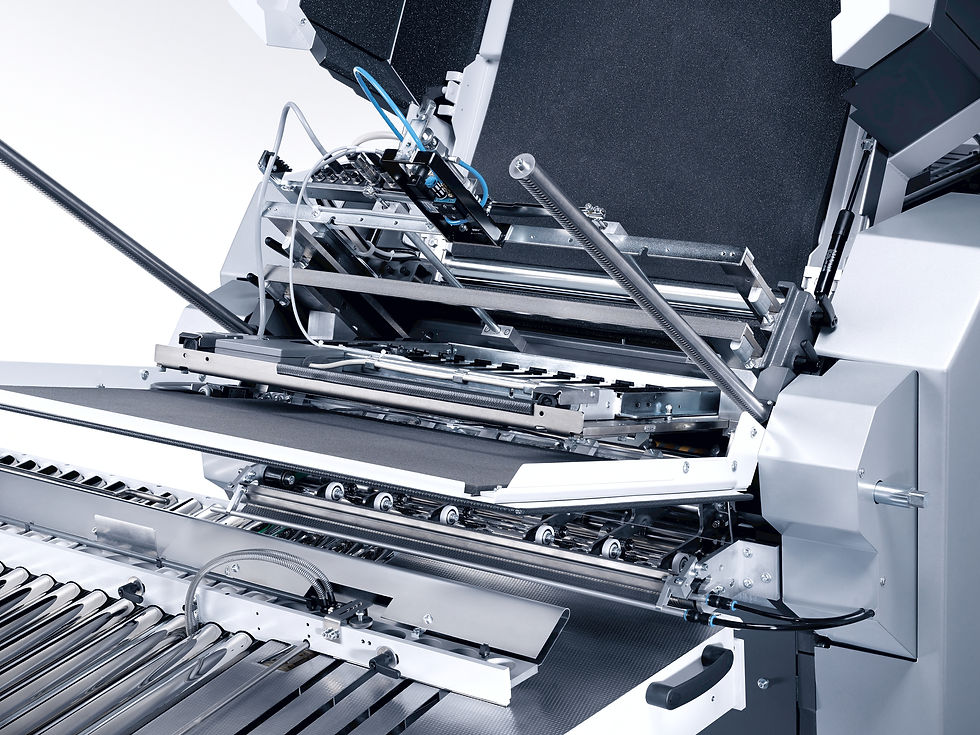
Buxton Press is replacing four folders with two to achieve a net 20% increase in folding output. Two new Stahlfolder TH 82-P machines are being installed.
The Stahlfolder TH 82-P uses shingle feeding that enables it to run at lower operating speeds with more control of the paper, even vulnerable stocks, to achieve even higher output. It is proving especially popular because it creates conventionally folded sections in volume.

‘Buxton Press prints more than 60 million paginated publications a year and needs to do so to the highest quality, cost effectively and to tight deadlines. It is vital that our post press equipment can unfailingly meet our exacting requirements,’ said Kirk Galloway, managing director.
‘Having seen the advance in technology with the new Stahlfolder TH 82-P first hand at drupa and, following extensive paper trials in Germany, we believe the time is right to invest.’

The first folder will be delivered in January, the second in March and Buxton has put an option on a third Stahlfolder following on from that.
‘Our operators’ reaction has been as if we were putting a brand new Maserati on the shop floor – a scramble for the driving seat and then competition between themselves as to who will maintain pole position!’ added Kirk.
With a reduction in machine numbers there will be some redeployment but staff will have the opportunity to learn new and additional skills, contributing to their personal development and enhancing flexible working practices.
‘Generally, pre-press and press have developed into a skilled but ‘button pressing’ business assisted by computerised programmes and external surveillance. Post press has also leapt forward technically but has retained more of the craft skills and knowledge of handling a miscellany of substrates that only comes as a result of long experience and highly prized manual skills but the introduction of these new folders with these technologies is changing this,’ said Kirk.


Comments